Top Ad 728x90

mercredi 22 avril 2026

George Clooney Twin Shockers See The Striking Transformation Of Alexander And Ella As They Grow Into Their Father Mini Mes

by


When the world thinks of George Clooney, they often conjure up images of the ultimate Hollywood bachelor—a silver-haired icon of sophistication, a prankster on movie sets, and a man whose commitment to the single life seemed as unshakeable as his box office appeal. For decades, Clooney was the quintessential movie star, navigating the heights of fame with a charm that felt both effortless and untouchable. Yet, the most fascinating plot twist in his storied life didn’t happen on a film set in London or a soundstage in Los Angeles. Instead, it unfolded on the shores of Lake Como, where the man who famously swore off marriage and fatherhood finally met his match in Amal Alamuddin. Today, the headlines aren’t just about George; they are focused on the two little humans who have inherited his famous smolder and charismatic spark: his twins, Alexander and Ella.

The transformation of George Clooney from a high-flying bachelor to a devoted, hands-on dad is a narrative that has captivated fans globally. It is a story of late-blooming domesticity that proves life’s most rewarding roles often come when we least expect them. To understand the gravity of this change, one must look back at the long, winding road Clooney traveled to reach this point of personal fulfillment. His career was a masterclass in slow-burn success. While many stars flame out after their first hit, Clooney built a foundation of grit and versatility.

His breakthrough on the seminal medical drama ER changed everything. As Dr. Doug Ross, Clooney didn’t just play a pediatrician; he redefined the television heartthrob for a new generation. He brought a sense of weary integrity and undeniable magnetic energy to the screen, a combination that made him an international sensation overnight. It was during those grueling years on the ER set that Clooney learned the work ethic that would define his future. He wasn’t just a face; he was a craftsman. This period laid the groundwork for his transition to the silver screen, where he would eventually tackle everything from caped crusaders to political thrillers.

The year 1997 stands out as a pivotal, if polarizing, moment in his trajectory. Taking on the mantle of the Dark Knight in Batman and Robin was a high-risk, high-reward move. While the film itself became a cult classic for its campiness rather than its cinematic depth, it solidified Clooney’s status as a $10 million leading man. It proved he could carry the weight of a massive franchise, even if he later joked about the “nipples on the Batsuit.” That humility—the ability to laugh at his own perceived failures—is exactly what endeared him to the public and kept his career thriving through more than 90 film projects. He became more than an actor; he became a producer, a director, and a humanitarian force.

Yet, despite the accolades and the mounting wealth, there was a sense that something was missing. Clooney spent years as the world’s most eligible bachelor, linked to various high-profile women, but he never seemed ready to anchor himself. That changed the moment he met Amal. A brilliant international human rights lawyer, Amal was not from the world of Hollywood artifice. She brought a level of intellectual depth and global perspective that challenged Clooney in ways no one else had. Their meeting by a lake was the beginning of a modern-day fairy tale that culminated in a breathtaking Italian wedding. The world watched as the man who once bet Michelle Pfeiffer he would never marry again traded his bachelor pad for a life of shared purpose.

The arrival of the twins, Alexander and Ella, in 2017 sent the media into a frenzy. Fans were desperate to see if the children would inherit George’s trademark features or Amal’s elegant poise. As the twins have grown from toddlers into five-year-olds, the consensus among fans is unanimous: they are absolute copies of their famous father. Recent glimpses of the children reveal Alexander’s mischievous grin and Ella’s soulful eyes, both mirroring the expressions that made George a star decades ago. The “striking resemblance” is not just a matter of aesthetics; it represents a genetic passing of the torch that has fans buzzing across every social media platform.

However, the true story isn’t just about the looks; it’s about the lifestyle and the values being instilled in these two young heirs. Living a life that many would envy, the twins are surrounded by the best of everything—from designer wardrobes to travels that span the globe’s most exotic destinations. They divide their time between the luxury of Lake Como, the sophistication of London, and the sunshine of California. Yet, beneath this veneer of extreme wealth, George and Amal have fought tooth and nail to give their children a “normal” upbringing.

George’s dedication to being a “present” father is perhaps his most impressive feat to date. Despite a schedule that would break a younger man, reports from those close to the family describe a father who is deeply involved in the minutiae of daily life. He isn’t a father who watches from the sidelines; he is in the trenches of parenting. Whether it is navigating the complexities of nap times, playing on the floor with toys, or taking quiet morning walks with his children, Clooney has embraced the “unfiltered love” and heavy responsibility of fatherhood with the same intensity he once brought to his movie roles. He has frequently spoken about how becoming a father in his mid-50s gave him a new sense of purpose that no Oscar or box office record could ever provide.

One of the most profound choices the couple has made is the decision to shield Alexander and Ella from the relentless gaze of the paparazzi. In an era where many celebrity parents use their children to bolster their social media brands, the Clooneys have taken the opposite approach. They understand that privacy is the ultimate luxury. By keeping the twins out of the constant spotlight, they are allowing them to grow, learn, and make mistakes without the weight of public expectation. This protective stance reveals a deep-seated humility and an understanding of the fragile balance between being a public figure and a private protector.

As we look at the legacy George Clooney is building, it is clear that his greatest achievements aren’t found on the Hollywood Walk of Fame. They are found in the quiet moments at home, in the values of integrity and compassion he and Amal are teaching their children, and in the way he has navigated the transition from “Sexiest Man Alive” to “World’s Most Devoted Dad.” The twins are indeed copies of their father in appearance, but more importantly, they are growing up in a household where family is the top priority.

George Clooney’s journey serves as a powerful reminder that it is never too late to start a new chapter. He spent half a century building a career, only to realize that the most meaningful work he would ever do would be raising the next generation. As Alexander and Ella continue to grow, the world will undoubtedly continue to watch with fascination, but for George, the only audience that truly matters is the one waiting for him at the dinner table. His story is a testament to the idea that while fame and fortune are fleeting, the bonds of family and the joy of seeing yourself reflected in your children’s eyes are the rewards that truly last a lifetime.

THE TRAGIC HIDDEN CHILDHOOD OF THE FRENCH ADONIS HOW A REJECTED BUTCHERS APPRENTICE ESCAPED THE SLUMS TO BECOME CINEMAS MOST DANGEROUS HEARTTHROB

by


The shimmering glow of the silver screen has a way of smoothing over the harsh edges of a person’s origins, but for the man who would become one of the defining icons of French cinema, the journey began far from glamour—in the shadow of instability and emotional fracture. Long before Alain Delon became a global symbol of effortless charisma and cool detachment, he was simply a boy growing up on the outskirts of Paris, shaped by a childhood that offered little consistency and even less certainty. Born in 1935 in the commune of Sceaux, his early life was not a tale of comfort or privilege, but one marked by disruption, separation, and a persistent search for belonging.

His early environment appeared, at first glance, to be modestly stable. His mother worked as a trained pharmacist with a disciplined, structured approach to life, while his father owned a small cinema—an ironic detail given the role film would later play in shaping his destiny. The family lived within a narrow band of middle-class respectability, with both parents contributing to the running of the local cinema. Yet behind this seemingly orderly façade, tension quietly accumulated. By the time Alain Delon was three years old, his parents separated, fracturing the emotional foundation of his early childhood and setting in motion a long period of instability.

As both parents quickly rebuilt their lives with new partners and new households, he found himself drifting between fragmented family structures. His mother remarried a butcher, introducing him to a very different world—one defined by physical labor, routine, and the stark realities of the trade. Meanwhile, his father also formed a new household, leaving the young boy to navigate a life divided between multiple homes, step-siblings, and shifting expectations. In this environment, Alain Delon often occupied a peripheral role, moving between spaces but rarely feeling rooted in any of them.

That lack of stability began to shape his behavior early. He struggled within traditional education systems, frequently clashing with authority and moving from school to school without finding a sense of belonging. Teachers saw unpredictability and defiance; beneath it was a child who had not yet found a place where he felt fully seen. His sense of displacement deepened, and rather than conforming, he increasingly resisted structure altogether. For Alain Delon, childhood became less about guidance and more about survival within environments that rarely felt designed for him.

In an attempt to redirect his path, he was introduced to vocational work. Influenced by his stepfather’s profession, he briefly entered the world of butchery as an apprentice. The work was physical, precise, and unforgiving—a stark contrast to the fragmented emotional world he had grown up in. Though he endured it for a short time, it did not align with his internal sense of identity. After leaving, he drifted through a series of modest jobs, including retail work, which exposed him to the rhythms of ordinary working-class life in postwar France. Yet none of these roles offered the direction he was searching for.

Eventually, seeking structure and perhaps a sense of discipline absent from his earlier years, Alain Delon enlisted in the French military. This period proved unexpectedly formative. Within the strict hierarchy and rigid expectations of military life, he encountered a framework that replaced chaos with order. For the first time, his energy was directed rather than scattered. The discipline of service provided not only structure but also a sense of identity built on performance, responsibility, and endurance rather than family instability.

When he returned to Paris after his service, he reentered civilian life transformed. He took work as a waiter in the city’s bustling cafés and restaurants, environments that demanded observation, adaptability, and presence without intrusion. It was in these spaces that his striking appearance and quiet intensity began to attract attention. The combination of restrained emotion and natural magnetism made him stand out in ways he did not yet fully understand. For Alain Delon, this period marked the subtle beginning of a shift—from anonymity toward recognition.

That recognition eventually opened the door to cinema. What he brought to the screen was not simply performance technique, but something more instinctive: a lived emotional depth shaped by abandonment, discipline, and survival. The sense of distance and mystery that would later define his screen persona was not manufactured—it was rooted in experience. When he finally entered the world of film, he carried with him the accumulated weight of a childhood marked by instability and a young adulthood defined by structure and self-reinvention.

Over time, Alain Delon became one of the most recognizable figures in international cinema, especially associated with the golden age of French film. His presence on screen came to symbolize a particular kind of restrained masculinity—cool, distant, and emotionally layered. Yet behind that cultivated image remained the echoes of the boy from Sceaux, shaped by separation, movement, and the search for identity in unstable surroundings.

His rise from a fragmented childhood to cinematic legend underscores a broader truth about transformation: that identity is often forged not in comfort, but in contrast. The instability of his early life, the discipline of his military service, and the anonymity of his early jobs all converged to shape a persona the world would later recognize instantly. Alain Delon did not simply become an actor—he constructed a self the world could finally see, even if it took years for him to fully recognize it himself.

The Unholy War Between The White House And The Vatican Why JD Vances Shocking Accusation Against Pope Leo Has The Entire World Bracing For A Spiritual Collapse

by


The corridors of power in Washington and the ancient halls of the Vatican have been drawn into a fast-escalating confrontation that is beginning to reshape how political and spiritual authority interact in the modern world. What initially surfaced as sharp public disagreements has developed into a deeper ideological clash over a single, enduring question: where does ultimate authority lie when moral conviction collides with state power? At the center of this unfolding tension is a rare and highly visible dispute involving Donald Trump and Pope Leo XIV, intensified further by controversial remarks from JD Vance. The situation has moved well beyond routine political disagreement; it now reflects a broader struggle over leadership itself, where national interest and religious moral teaching appear to be moving on a direct collision course.

The dispute began when Donald Trump issued a series of pointed criticisms of Pope Leo XIV, accusing him of political naivety on issues such as crime and foreign affairs. The sharpest friction emerged over the Pope’s outspoken opposition to escalating global military tensions, particularly in relation to the Middle East and rising conflict involving Iran. While the Pope maintained his consistent emphasis on peace and the moral costs of war, framing his position as a defense of human dignity, the administration interpreted his statements as an intrusion into sovereign decision-making. The rhetoric intensified further when Trump circulated an AI-generated image depicting himself in a Christ-like form, a move that provoked strong reactions across religious and political communities alike. Supporters dismissed it as symbolic or satirical expression, while critics and theologians viewed it as a troubling merging of political authority with sacred imagery.

The controversy deepened significantly following comments made by JD Vance. As a prominent Catholic convert, his intervention carried added symbolic weight. Vance publicly questioned the appropriateness of direct papal involvement in policy discourse, arguing that the Vatican should confine itself to broad moral reflection while leaving governance to elected leaders. Though framed as a statement about institutional boundaries, his remarks were widely interpreted as a forceful attempt to redraw the limits of religious influence in political affairs. In doing so, Vance highlighted a longstanding tension in Western political thought: the unresolved boundary between moral authority and democratic governance.

From the administration’s standpoint, the argument rests on accountability and expertise. Government officials maintain that decisions involving war, diplomacy, and national security must remain under the control of those elected by the public and responsible for immediate consequences. In this view, religious leaders—no matter how globally respected—do not operate within the framework of electoral legitimacy or classified intelligence, and therefore should not direct or constrain policy decisions. Vance’s position reflects a broader political current that prioritizes national sovereignty and institutional separation over transnational moral authority.

On the other side, the Catholic Church asserts that moral commentary is not only appropriate but essential to its mission. Historically, the papacy has positioned itself as a conscience of global affairs, speaking on behalf of human dignity, peace, and ethical responsibility. From this perspective, Pope Leo XIV’s engagement in geopolitical discourse is not interference but obligation. Silence in the face of war or humanitarian crisis would, in this view, represent a failure of spiritual leadership. The Church’s argument rests on the belief that moral law cannot be subordinated entirely to political convenience, especially when human lives are at stake.

Public reaction has mirrored the broader polarization of contemporary society. Supporters of the administration frame the confrontation as a necessary assertion of political autonomy and national interest, rejecting what they see as external moral lecturing. Critics, however, view the rhetoric as a dangerous erosion of respect for religious authority and a deliberate escalation of symbolic provocation, particularly in the use of sacred imagery for political effect.

What makes this moment especially significant is not simply the disagreement itself, but its visibility and intensity. While tensions between U.S. administrations and the Vatican are not new, the directness of this exchange marks a departure from the traditionally restrained diplomatic tone that has defined such relationships. It reflects a broader shift in global discourse, where institutional boundaries are increasingly tested by public, media-driven confrontation.

At its core, the dispute forces a difficult question into public view: whether moral authority and political authority can coexist without conflict in a world shaped by immediate crises and polarized narratives. Governments operate within the urgency of security and survival, while religious institutions speak in terms of universal ethics and long-term human consequences. When those perspectives intersect, disagreement is not only possible but structurally inevitable.

As the situation continues to develop, the outcome remains uncertain. What is already clear, however, is that the clash between Washington and the Vatican has become more than a political episode—it has become a reflection of a deeper global tension over who has the right to define what is right.

WHEEL OF FORTUNE CONTESTANT DELINDA ROOD STUNS RYAN SEACREST WITH A LIGHTNING FAST BONUS ROUND SOLVE THAT LEAVES THE AUDIENCE GASPING AND WALKS AWAY WITH A MASSIVE SIX FIGURE FORTUNE

by


The high stakes world of television game shows often features moments of tension and near misses but every so often a contestant emerges who seems to operate on a completely different frequency than the rest of the world. On a recent episode of the legendary Wheel of Fortune Delinda Rood a contestant representing the quiet community of Rosemount turned what began as a routine appearance into one of the most electric and talked about television moments of the season. Competing against formidable opponents from Palo Alto and Chattanooga Rood arrived on the iconic Sony Pictures Studios stage with a quiet confidence that would eventually explode into a viral sensation. While the early rounds of the game were steady and featured the usual cautious maneuvering and missed opportunities that define the first half of a broadcast Rood was simply biding her time and reading the board like a seasoned grandmaster.

Delinda Rood has often described herself as an ambivert a personality trait that allows her to balance the introspective focus of an introvert with the bold communicative energy of an extrovert. This unique psychological makeup was on full display throughout the game as she remained remarkably calm observant and strategic. While her competitors occasionally faltered under the bright studio lights Rood waited for the mechanical and mathematical shifts of the wheel to work in her favor. The turning point of the episode came during a key toss up puzzle where the letters began to populate the board with increasing speed. Rood pounced on the solution with a level of certainty that visibly rattled her opponents and from that moment forward the momentum of the entire hour shifted in her direction. Her gameplay became a masterclass in efficiency as she avoided the unnecessary risks of extra spins and focused on solving the puzzles before the wheel could turn against her.

By the time the final segments approached Rood had maintained such a dominant control over the board that her invitation to the Bonus Round was a foregone conclusion. However even the most seasoned Wheel of Fortune fans know that the Bonus Round is a completely different beast where the pressure of the clock and the isolation of the stage can cause even the most brilliant players to freeze. As she stood beside host Ryan Seacrest the atmosphere in the studio was thick with anticipation. The category was revealed and the standard R S T L N E letters were flipped over leaving a skeletal structure of a phrase that looked nearly impossible to solve at first glance. Rood selected her additional consonants and vowel and as the board updated the puzzle remained largely incomplete.

What happened next was a display of cognitive speed that left the production crew and the viewers at home in absolute shock. The timer had barely begun its countdown when Rood reacted. There was no hesitation no stuttering through potential options and no frantic searching of the alphabet. With a precision that felt almost supernatural she delivered the correct answer with such blinding speed that the board barely had time to register the solve. The studio audience erupted in a deafening roar of approval and even Ryan Seacrest who has seen a lifetime of television highlights was visibly stunned by the rapid fire victory. He stood for a moment in genuine disbelief before congratulating Rood on a performance that defied the typical logic of the game.

The reveal of the prize envelope was the final piece of the puzzle for a truly legendary night. As the total winnings were calculated it was revealed that Rood had accumulated an astounding 65650 in cash and prizes. The look of pure joy on her face as she realized the magnitude of her win was a refreshing reminder of why this show has remained a staple of American culture for decades. But beyond the impressive financial windfall it was her composure and her ability to perform under the crushing pressure of a national broadcast that captured the internet’s attention. Within minutes of the episodes conclusion clips of her lightning fast solve began to circulate across social media platforms with fans praising her focus timing and incredible mental acuity.

Many longtime viewers noted in the comments sections of these viral videos how rare it is to see a contestant solve a high stakes Bonus Round puzzle with such confidence especially when so many letters remain unrevealed. Roods victory was not just a matter of luck it was a testament to the power of preparation and awareness. She had clearly spent time studying the patterns of the game and honing her ability to recognize phrases from the briefest of glimpses. In an era where many contestants get tripped up by the nerves of the spotlight Rood remained a pillar of calm decision making proving that the mind is the most powerful tool a player can bring to the wheel.

The aftermath of the episode has seen Delinda Rood become a minor celebrity in her hometown and among the global community of game show enthusiasts. Her performance has been cited as a blueprint for how to play the game with dignity and intelligence. She didn’t rely on grandstanding or aggressive tactics instead she used the steady rhythm of an ambivert to stay present in every moment and strike only when the opportunity was perfect. The Rosemount representative has become a symbol of the everyday person achieving extraordinary things through a mixture of talent and a cool head.

As the episode continues to air in syndication and populate the highlight reels of game show history the story of Delinda Rood remains an unforgettable highlight of the 2026 season. It serves as a reminder to every aspiring contestant that while the wheel might be unpredictable the human mind is capable of stunning feats of speed and accuracy. The image of Rood solving that final puzzle before the clock could even start is an iconic moment that will be played for years to come. For Delinda it was a life changing win but for the millions of people watching from their living rooms it was a thrilling demonstration of what happens when preparation meets opportunity under the bright lights of Hollywood. The Queen of Rosemount has officially etched her name into the history books of Wheel of Fortune and her 65650 victory is a legacy that will inspire future players to stay calm stay focused and trust their instincts when the big moment finally arrives.

Hollywood Mourns the Quiet Giant How the Untimely Loss of TK Carter at 69 Left the Entertainment World in Silence

by


The news didn’t arrive with the sudden, jarring explosion of a summer blockbuster. Instead, it traveled like a low, rolling tide, whispering through the digital corridors of social media and the quiet conversations of industry veterans. But when the reality finally settled, the impact was heavy and unmistakable. T.K. Carter, a man whose face had become a comforting constant in the living rooms of millions for over four decades, had transitioned from this life at the age of 69. For many who grew up watching him, it didn’t feel like the passing of a distant celebrity; it felt like the loss of a neighbor, a mentor, or a long-lost friend who had been there through the changing seasons of their lives.

To understand the weight of T.K. Carter’s legacy, one must look past the glitz of the red carpet and delve into the rare, foundational talent that he brought to every frame of film and every minute of television. From his earliest days, it was clear that he possessed a spark that couldn’t be manufactured by an acting coach or a public relations firm. He didn’t just perform; he inhabited. As a child, the spotlight didn’t feel like a predatory eye but like a natural sun under which he was meant to grow. He had an innate, almost spiritual understanding of the human condition, an ability to mirror the nuances of emotion without ever appearing to try. While others fought for center stage, T.K. seemed to drift toward the truth of a moment, anchoring every scene he touched with a sense of grounded reality.

His personal geography played a vital role in shaping the man and the artist. Moving between the sharp, high-stakes intensity of New York and the sun-drenched, laid-back atmosphere of California, he became a master of duality. New York gave him his grit, his timing, and that unmistakable urban pulse that made his characters feel lived-in and street-wise. California, by contrast, provided him with a sense of calm and a cinematic ease that allowed him to flow through various genres with effortless grace. This balance made him a rare commodity in Hollywood—an actor who could be simultaneously intense and serene, funny and heartbreaking, all within the span of a single monologue.

Unlike many of his contemporaries who burned bright and fast in a desperate chase for fame, T.K. Carter chose a different path. He was a builder. He understood that in an industry built on fleeting trends, the most valuable currency is trust. Role by role, year by year, he constructed a bridge to the audience. He wasn’t the kind of actor who demanded your attention through loud, ego-driven performances; he was the kind who earned your loyalty through consistency. You might not have realized just how much his presence meant until you saw his name in the opening credits and felt an immediate sense of relief, knowing the story was in capable hands.

By the time the 1980s arrived, T.K. had become a steady heartbeat in the world of entertainment. His work during this era wasn’t characterized by overnight stardom, but by a deepening respect from his peers and a growing affection from the public. Whether he was providing the comedic relief that saved a scene or the dramatic weight that grounded a plot, he treated every role with the same level of reverence. His characters never felt like ink on a page; they felt like men who had lives before the camera started rolling and would continue to exist long after the credits finished. He had a unique ability to disappear into a role while somehow leaving his own warm, authentic thumbprint on the performance.

Behind the scenes, away from the prying eyes of the paparazzi and the artificial light of the studio, the stories of T.K. Carter are even more profound. In an industry often criticized for its vanity, T.K. was described as a beacon of humility and professional integrity. He was the actor who knew the names of the crew members, the one who took the time to mentor younger performers who were still finding their footing. He was patient, grounded, and deeply respectful of the craft. Directors wanted to work with him not just because he hit his marks and delivered his lines, but because of the energy he brought to the set—an energy of collaboration rather than competition. He understood that a great story is a collective effort, and he was always willing to be a part of the whole rather than the center of the universe.

When the announcement of his passing finally broke, a strange and beautiful phenomenon began to take place. Across the globe, viewers didn’t just post a single tribute; they began to revisit the archives. They sought out the old clips, the sitcom guest spots, the cult classic film roles, and the dramatic turns that had defined their favorite eras of television. They began to realize that T.K. Carter had been a silent companion through their most formative years. He was there during their childhood Saturday mornings, their teenage movie nights, and their adult evening wind-downs. The realization of his omnipresence in the cultural landscape made the news of his departure feel all the more significant. It was as if a familiar piece of the furniture in the house of American storytelling had suddenly been removed.

The heaviness of this moment stems from the fact that his career wasn’t built on the unstable ground of a single, viral iconic moment. It was built on the bedrock of reliability. In a world that often prioritizes the loud and the scandalous, T.K. Carter was a testament to the power of showing up and doing the work with excellence, time and time again. He didn’t need the spotlight to find him because he carried his own light. He didn’t need to shout to be heard because his work spoke in a clear, resonant voice that crossed cultural and generational lines.

Now, as the industry looks toward the future, the screen feels undeniably different. It isn’t that the space is empty—Hollywood is always full of new faces and fresh talent—but the texture has changed. We have lost a craftsman who understood the soul of performance. We have lost a man who quietly helped shape the narrative of our lives without ever demanding a thank-you. T.K. Carter’s legacy is not just found in the film reels or the digital streams; it is found in the way he made us feel—seen, entertained, and connected to something authentic. He taught us that a life well-lived and a career well-crafted are not about how many times you dominate the conversation, but about how much you are missed when you finally step away from the microphone. The next story will begin without him, but his influence will be felt in every performance that prioritizes truth over ego and warmth over artifice. Adieu to a quiet giant; the stage is darker today, but the light he left behind will shine in our memories forever.

The Secret Attic Key Why My Husband Desperately Wanted To Sell My Grandmothers House And The Hidden Letter That Ended Our Seven Year Marriage

by


My name is Mira, and for seven years, I believed I was living a version of the American dream that most people only see on greeting cards. I live just outside Portland, Oregon, in a neighborhood defined by white shutters, lemon trees, and the sound of children’s laughter echoing through the streets until the lamps flicker to life. My husband, Paul, was the architect of this perfect image. A successful finance professional who never missed an anniversary and always knew how to play the role of the doting father to our four-year-old twins, Ellie and June. I thought our love was like gravity—invisible, constant, and the force that held my entire world together. I never realized that gravity could suddenly fail.

The shift began the day my grandmother passed away at ninety-two. She was the anchor of my childhood, a woman who smelled of lavender soap and Earl Grey tea, and whose small house on the hill was my ultimate sanctuary. While I was drowning in the initial waves of grief, Paul seemed to be operating on a different frequency. His eyes weren’t wet with tears; they were darting around the property with a cold, predatory focus. Scarcely three days after the funeral, he began pressuring me to sell. He spoke about the house needing repairs we couldn’t afford and the “waste” of letting such an asset sit idle. When I told him I needed time to breathe and process the loss, his irritation was palpable. He told me that we needed the money, not my memories.

I returned to the house alone one afternoon to collect the final remnants of her life. As I sat on her bed, mourning the silence, Grandma’s longtime neighbor, Mrs. Callahan, approached me at the gate. She looked nervous, glancing toward the street as if she were being watched. She slipped an old-fashioned brass key into my hand and whispered a cryptic warning about what my husband had been doing while my grandmother was still alive. She told me the key belonged to the attic and that my grandmother had insisted I be the one to receive it personally.

I sent Paul home with the girls, claiming I needed a few more hours of solitude. Once his car disappeared around the bend, I climbed the creaking stairs to the small, painted-over attic door. My heart was a drum in my chest as the lock clicked open. I expected to find old photo albums or perhaps some antique furniture, but the attic was mostly empty save for a brown leather suitcase tucked against the far wall. Inside that suitcase lay the destruction of my marriage.

I found a letter addressed to me in my grandmother’s shaky, unmistakable script. As I read her words, the man I thought I knew vanished, replaced by a stranger. She revealed that for over a year, Paul had been visiting her behind my back. He hadn’t been checking on her health; he had been blackmailing her. He told her that our finances were in ruin and that if she didn’t sell her home and move into a care facility to provide us with the cash, our marriage would collapse. He had used my happiness as a weapon against a ninety-two-year-old woman, terrifying her with lies about our stability.

The letter was a roadmap of Paul’s deceit. She wrote that he was persistent and cold, and though she initially resisted, she eventually signed preliminary paperwork out of fear for my future. However, she never completed the sale. In her final months, she realized he was deceiving her and took steps to protect me. She had legally named me the sole beneficiary of the house and left all the supporting documents in that suitcase, along with a warning: Paul needed a vast sum of money, and she didn’t know why.

I sat in that dusty attic until the sun went down, reading the property records and her will over and over. The man who kissed me every night had spent a year bullying a dying woman. I didn’t go home immediately. I moved the suitcase to a secure storage unit and placed the deed and the letter in a safety deposit box that only I could access. I needed a night of silence to prepare for the storm.

The next morning, Paul walked into the kitchen in his usual crisp button-down and tie, acting as though it were any other Wednesday. When I confronted him about his secret visits to my grandmother, his first instinct was to gaslight me. He laughed, telling me I was tired and grieving and that I was imagining things. But when I told him I had found the letter and the deed, the mask finally slipped. The flicker of fear in his eyes was the only honesty I had seen from him in years.

He collapsed into a chair and confessed. A year ago, he had gambled two-thirds of our life savings on a cryptocurrency startup that crashed. Instead of coming to me with the truth, he panicked. He started moving money around, lying about tax bills and home repairs, and when he ran out of options, he turned to my grandmother’s house as his personal piggy bank. He tried to claim he did it for us, for the girls, and for our future. He begged for a second chance, promising therapy and total transparency.

I looked at him and realized that a marriage built on the psychological torment of a grandmother isn’t a marriage worth saving. He hadn’t made a mistake; he had made a series of calculated choices to prioritize his ego over the well-being of his family. I didn’t yell or throw things. I simply told him that he had made me question my own grief and that the house he was so desperate to sell was now the only place he was no longer welcome.

By the end of the month, the divorce was finalized. I kept the house on the hill, the one that had always been my true home. I repainted the rooms, clearing out the lingering energy of Paul’s greed, and I placed a photo of my grandmother on the mantel. I framed her letter and kept it in my office—not as a monument to Paul’s betrayal, but as a testament to her enduring love. She had protected me from beyond the grave, ensuring that the man who tried to steal my sanctuary ended up being the one left with nothing. The house remains surrounded by hydrangeas and old oak trees, a quiet fortress where my daughters and I are finally safe from the man who once promised he would never hurt us.

Donald Trump Raises Concerns After Sharing Cryptic Post Saying “The End Is Near”

by


Recent online discussions have focused on a video shared by former U.S. President Donald Trump on his social media platform.

The post quickly attracted attention due to the song choice and lack of context, prompting widespread interpretation across social media platforms and news commentary spaces.

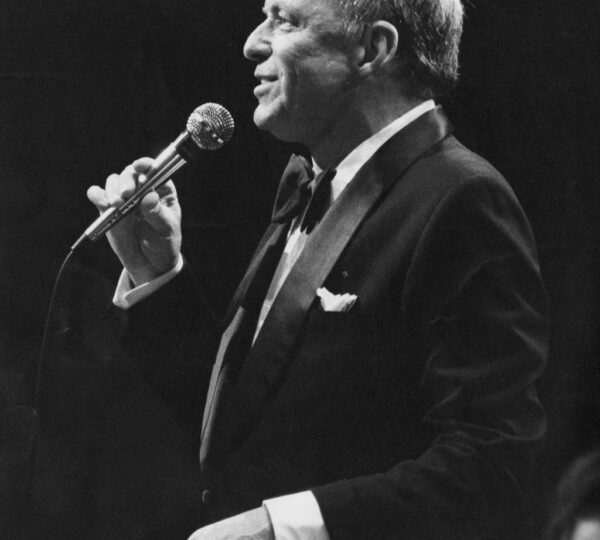
The video featured a performance of Frank Sinatra’s well-known song “My Way,” which is often associated with reflection on life choices and personal legacy.

The absence of an explanation from Trump led to a variety of interpretations among viewers.

Some social media users discussed the lyrics of the song, particularly its reflective tone, and debated whether the post carried any political or personal meaning. Others simply viewed it as a music share without deeper significance.

Frank Sinatra’s “My Way” is a widely recognized classic that has been used in many cultural contexts over the years. It is frequently associated with themes of independence, reflection, and personal decisions made over a lifetime.

The reactions online varied significantly, as is often the case with high-profile public figures. Some users analyzed the timing of the post, while others cautioned against overinterpreting symbolic meaning in music shares.

In digital communication environments, especially on platforms such as Truth Social and X (formerly Twitter), public figures frequently share content that is later subject to interpretation. This often leads to discussions that go beyond the original intent of the post.

Trump’s online activity has long attracted public attention due to its direct and often informal style. As a result, many of his posts tend to generate immediate commentary from supporters, critics, and media analysts alike.

In this case, the lack of caption or explanation accompanying the video contributed to the wide range of interpretations seen across social media.

At the same time, it is important to note that online speculation does not necessarily reflect official statements or confirmed intentions. Public posts from political figures are often interpreted in multiple ways depending on audience perspective.

Media coverage of such posts typically highlights both the content itself and the public reaction it generates, rather than confirming any specific meaning behind it.

Frank Sinatra’s music, including “My Way,” has historically been used in various public and private contexts, often without political intent. This contributes to the ambiguity when such songs appear in modern digital posts.

The situation illustrates how social media can amplify interpretations, especially when content is emotionally or symbolically rich.

In general, analysts often note that public reactions to symbolic content can vary widely depending on current political climates, personal beliefs, and media framing.

This can lead to rapid discussion cycles online, where interpretations spread quickly before any official clarification is provided.

In many cases, such posts remain open to interpretation unless directly explained by the person who shared them.

The discussion around this particular video followed a familiar pattern seen in modern political communication, where short-form content is widely analyzed in real time by global audiences.

Some commentators emphasized that music choices in public posts can be coincidental or personal, without intended political messaging. Others highlighted how public figures often face heightened scrutiny regarding even minor online activity.

This dynamic reflects the broader role of social media in shaping modern political discourse, where interpretation can spread faster than verified context.

As of now, there is no confirmed official explanation attached to the video beyond its original posting.

Frank Sinatra’s “My Way” continues to be widely used in cultural and entertainment contexts, reinforcing its strong emotional and symbolic presence in public imagination.

The combination of a well-known song and a high-profile political figure naturally increases attention and discussion online.

In conclusion, the reaction to the video highlights how digital platforms transform simple content shares into widely debated topics. Public interpretation often depends on context, timing, and audience perception rather than confirmed meaning.

Such situations demonstrate the complexity of communication in the modern social media environment, where symbolism and speculation frequently intersect.

Without additional clarification from the source of the post, interpretations remain varied and largely subjective across different online communities.