
The U.S. Supreme Court is expected to issue a ruling in a Louisiana redistricting case that could affect how the Voting Rights Act is applied in election disputes. The case, Louisiana v. Callais, challenges a congressional map approved by Louisiana lawmakers that created a second majority Black district after earlier court challenges.
The dispute centers on Section 2 of the Voting Rights Act of 1965, which allows private individuals and organizations to challenge election laws or redistricting plans they argue dilute the voting power of minority communities, The Intelligencer reported.
The Supreme Court previously ordered the case to be reargued, a step that signaled the justices may revisit how race can be considered when drawing congressional districts.
During oral arguments, the justices examined whether the use of race to create majority minority districts could conflict with the Equal Protection Clause of the 14th Amendment.
Section 2 of the Voting Rights Act has been the primary legal tool for challenging redistricting plans since the Supreme Court’s 2013 decision in Shelby County v. Holder.
That ruling eliminated the law’s preclearance provision, which previously required certain states to obtain federal approval before implementing changes to election laws.
Legal analysts say the Court could issue a ruling that either limits the scope of Section 2 or establishes new standards for lawsuits challenging district maps.
A decision could also influence future redistricting efforts in states where one party controls the legislature and the governor’s office.
Analysts have pointed to several states, including Georgia, South Carolina, Tennessee, Missouri, and Florida, where new congressional maps could potentially be considered ahead of the 2026 midterm elections, depending on the outcome of the case.
The Court could also determine when any changes to the legal standard would take effect.
In past election-related cases, the Court has cited the Purcell principle, which advises courts to avoid making changes to election rules close to an election.
If the justices apply that principle, any major changes resulting from the ruling could take effect after the 2026 election cycle.
Chief Justice John Roberts, the author of the 2023 Allen v. Milligan ruling that requires the establishment of a second majority-Black district in Alabama, examined whether this framework is consistent with Allen and the Court’s Thornburg v. Gingles criteria.
The test mandates that plaintiffs demonstrate a minority group is not only sizable and cohesive but also experiences majority bloc voting that undermines their electoral candidates. Roberts appeared focused on aligning the proposal with established norms, steering clear of a complete transformation.
Justice Brett Kavanaugh, an influential voice in the Allen case alongside Roberts and the liberal justices, raised the possibility of a “sunset” clause for Section 2 remedies, referencing precedents that restrict race-based policies to temporary solutions.
Voting rights organizations aligned with the Democratic Party are already warning that the removal or restriction of Section 2 could empower Republican-led legislatures to change the boundaries of as many as 19 congressional districts to their advantage.
Fair Fight Action and the Black Voters Matter Fund argue that if Section 2 of the Voting Rights Act is invalidated, it could significantly increase the likelihood of Republicans maintaining control over the House of Representatives for years.
Research has identified 27 congressional seats nationwide that could be redrawn to benefit Republicans, contingent on the current legal and political landscape remaining unchanged.
Nineteen of these changes are directly tied to the potential loss of Section 2 protections.
As the nation awaits the Supreme Court ruling, there’s now a push in some states to consider creating their own version of a “Voting Rights Act.”
Zakiya Summers, a Democrat from Mississippi, and Johnny DuPree, a Democrat from the state senate, both introduced bills to enact a state-level version of the Voting Rights Act of 1965.
Trump Removes NSF Board Members As Funding Cuts Raise Concerns
The Trump administration has terminated multiple members of the National Science Foundation’s governing board. The move has raised concerns among scientists and lawmakers about the agency’s future direction.
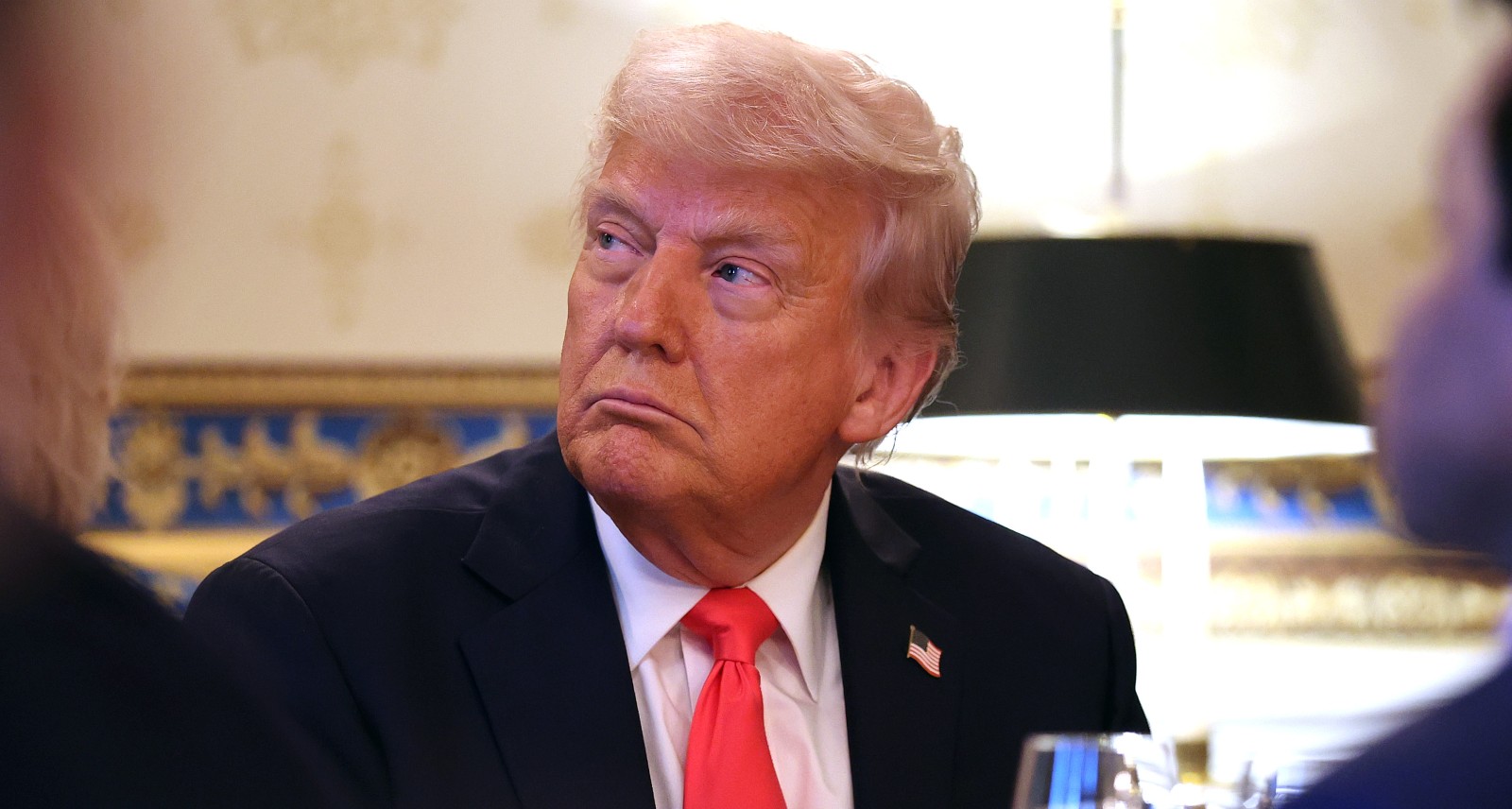
Members of the National Science Board received notices from the White House Presidential Personnel Office informing them that their roles were ending immediately.
“On behalf of President Donald J. Trump, I’m writing to inform you that your position as a member of the National Science Board is terminated, effective immediately,” the message read.
Board member Marvi Matos Rodriguez said she learned of her termination while reviewing materials tied to her role. She had been serving on the board since 2022.
“The idea of having six-year terms is you get to do something significant, impactful and go beyond administration, political administrations,” Rodriguez said.
It remains unclear how many members were removed or whether replacements will be named. The White House and the National Science Foundation did not immediately respond to requests for comment.
Rep. Zoe Lofgren, the top Democrat on the House Committee on Science, Space and Technology, sharply criticized the decision.
“The NSB is apolitical,” Lofgren said in a statement. “It advises the president on the future of NSF.”
She accused the administration of undermining scientific leadership and independence.
“It unfortunately is no surprise a president who has attacked NSF from day one would seek to destroy the board that helps guide the Foundation,” she said.
Lofgren also questioned whether future appointees would remain independent.
“Will the president fill the NSB with MAGA loyalists who won’t stand up to him as he hands over our leadership in science to our adversaries?” she said.
The National Science Foundation has faced broader changes since Trump returned to office. The administration has canceled or suspended nearly 1,400 grants, citing shifting policy priorities.
Those grants account for roughly a quarter of federally funded basic scientific research in the United States. Critics, including former NSF directors, have warned that continued cuts could weaken the nation’s scientific standing.
The administration’s proposed 2027 budget seeks to reduce NSF funding by more than half. An Office of Management and Budget spokesperson previously said the cuts reflect “a strategic alignment of resources in a constrained fiscal environment.”
President Trump has nominated Jim O’Neill to lead the agency. His nomination is currently pending before the Senate Committee on Health, Education, Labor, and Pensions.
This comes as the midterms are less than six months away.
Republican National Committee Chairman Joe Gruters said Republicans may outspend Democrats this election cycle, a dramatic reversal from past campaigns where Democrats often held the fundraising advantage.
Gruters argued Republicans are entering the midterm cycle with significantly stronger financial positioning and unprecedented coordination across the conservative movement.
Host Mike Slater asked Gruters to put the reported $70 million Democrats spent in Virginia’s recent redistricting battle into perspective.
“How much money is that to the parties?” Slater asked.
Gruters responded by painting a bleak financial picture for Democrats.
“The DNC has minus 4 million [dollars], and it wasn’t the DNC that plowed $70 million: It was the collective,” Gruters said.
“So, if you look at the collective on the right, we may have $800 million,” he continued.
“The collective on the left may have $350 million, and when you have the court, there’s gonna be a court case that is ruled on in the next week or two, coordinated campaign limits, which will magnify that, which will allow full coordination and allow the parties to spend at the candidate rate, which is massive for us,” he said.
Gruters said the financial landscape could mark a historic break from previous election cycles.
“When you have that financial advantage, people, you know, people don’t know that the Democrats routinely spend more than us on election cycles, because they have more massive donors and that will write massive checks,” he said.
“But this time, this cycle [we] will either spend a parity or will outspend them, and that’s never happened before,” he added.
According to Gruters, the RNC itself is in far stronger shape than the Democratic National Committee.
He said the RNC currently has “about $125 million” on hand compared to what he described as negative cash reserves at the DNC.
Gruters also pointed to allied Republican organizations as part of a broader coordinated effort.
A brand new Real Polling in Real Time with Zogby found that Democrats and Republicans are essentially tied months before November’s crucial midterm elections, possibly spelling bad news for the Democratic Party.
The Zogby Strategies survey on the 2026 Generic Congressional Ballot found that Democrats are at 46.3 percent and Republicans are at 45.8 percent.
The significance of the poll shows a sharp drop from the pollster’s previous (February) result, which found Democrats leading by +5 points. It’s essentially a statistical tie within the margin of error.


0 commentaires:
Enregistrer un commentaire