The state of Indiana was recently swept up in a wave of nostalgia and pride as basketball icon Larry Joe Bird—the legendary “Hick from French Lick”—became the center of a heartfelt celebration. Known to the world as “Larry Legend,” Bird’s enduring connection to his home state was reaffirmed during a public appearance that served as a powerful reminder of his journey from a small-town prospect to one of the most dominant forces in NBA history. For the residents of Indiana, the moment was more than just a celebrity sighting; it was a homecoming for a man whose identity is inextricably linked to the hardwood courts of the Hoosier State.
The atmosphere at the gathering was described by those in attendance as a perfect blend of celebratory energy and deep-seated respect. Bird, appearing relaxed and characteristically humble, was met with a standing ovation from longtime supporters who have followed his career since his days at Indiana State University. In an era of flashy, short-lived stardom, Bird’s presence offered a grounding sense of continuity. Fans reflected on the gritty, high-IQ style of play that defined his tenure with the Boston Celtics, where his three championship rings and three consecutive MVP awards cemented his status as a basketball deity.
Larry Bird’s legacy is built on a foundation of relentless determination and an almost mythical work ethic. He wasn’t always the fastest or the highest jumper on the court, but he outworked and outthought every opponent he faced. This spirit of perseverance is precisely why he remains such a potent symbol in Indiana, a place that prizes hard work and fundamental excellence. The recent confirmation of his ongoing involvement in the community served to reignite the admiration of a generation that grew up watching his legendary duels with Magic Johnson, while introducing younger fans to the standard of excellence he set for the sport.
As news of the appearance spread, social media was flooded with tributes from fellow athletes, analysts, and admirers. Many praised Bird not just for his accolades, but for his integrity and his refusal to leave his roots behind. Athletes from various disciplines cited him as a primary influence, noting that his leadership style—leading by example and demanding the absolute best from his teammates—remains the gold standard for competitive sports. The outpouring of affection highlighted a universal truth: Larry Bird’s influence on the game of basketball hasn’t faded; it has simply matured into a permanent part of the sport’s cultural fabric.
Beyond the statistics and the highlight reels, Bird represents a specific era of basketball defined by fierce loyalty and storied rivalries. His continued presence in the public eye provides a bridge between the classic grit of the 1980s and the modern global phenomenon the NBA has become. For the people of Indiana, he remains a living testament to the idea that greatness can emerge from the quietest corners of the map. As the event concluded, the sentiment across the community was clear: while Larry Bird may have conquered the world of professional sports, he will always be Indiana’s favorite son. His name continues to shine with a luster that time cannot dim, proving that true legends never really leave the court; they just become part of the rafters.
In a rapidly escalating development that has disrupted local transit and cast a deep sense of uncertainty over the surrounding community, law enforcement officials have issued an urgent directive for all civilians to avoid a designated high-risk zone.
What initially appeared to be a contained and routine response has quickly expanded into a full-scale tactical operation. Officers from multiple units have converged on the scene, working in coordination to manage what authorities are describing as an active and potentially life-threatening situation. The shift from a localized incident to a major emergency response has been swift, leaving residents and commuters alike trying to make sense of the unfolding events.
Emergency services have acted with careful precision, establishing a wide, multi-layered perimeter designed to secure the area and prevent unauthorized access. Major roads have been blocked off, public transportation routes have been diverted or suspended, and entry points are being strictly monitored. Only essential personnel are being allowed through the restricted zone, while others are being directed to keep their distance. Officials have emphasized that these measures are not excessive, but necessary. The directive for civilians to remain clear is rooted in a commitment to safety, with the goal of minimizing any potential risk while the situation remains unresolved.
The transformation of the area has been both immediate and striking. What was once an ordinary, predictable environment has been reshaped into a highly controlled and tightly secured zone. The presence of law enforcement is impossible to overlook. Dozens of vehicles line the streets, forming a visible barrier that signals the seriousness of the situation. Standard patrol cars are positioned alongside specialized units, including armored vehicles and mobile command centers, all strategically placed to support the ongoing operation. The coordination among these units reflects a level of preparedness designed to handle complex and rapidly changing circumstances.
Flashing emergency lights dominate the visual landscape, casting red and blue reflections across buildings, streets, and nearby structures. The steady rhythm of these lights creates an atmosphere that feels both urgent and surreal, as if the area has been temporarily removed from its normal routine. The usual sounds of daily life have been replaced by radio communications, distant sirens, and the movement of personnel carrying out their assigned roles. For those observing from a distance, the scene underscores the seriousness of the response and the uncertainty surrounding the situation.
Authorities have remained measured in their public statements, providing updates when possible while also maintaining operational discretion. This balance is critical in situations where information must be carefully managed to avoid interference with ongoing efforts. While details about the nature of the threat have not been fully disclosed, officials have reiterated that the response is being handled with the highest level of caution and professionalism. Their priority remains clear: to bring the situation under control while ensuring the safety of both civilians and those involved in the response.
The impact on the local community has been significant. Residents in nearby areas have been advised to stay indoors, and businesses within the affected zone have temporarily closed. The disruption has extended beyond physical boundaries, creating a ripple effect of concern and speculation. Social media and local news outlets have become primary sources of information, though authorities continue to urge the public to rely on verified updates to avoid misinformation.
As the operation continues, the focus remains on resolution and safety. Situations like this highlight the complexity of emergency response and the importance of coordination among various agencies. While the visible presence of law enforcement may be unsettling, it also serves as a reminder of the systems in place to respond to critical incidents.
For now, the area remains under strict control, and the outcome is still uncertain. What is clear, however, is that every measure being taken reflects a deliberate effort to manage risk and protect lives. As updates continue to emerge, the community watches closely, hoping for a swift and safe resolution to a situation that has, for the moment, brought everyday life to a standstill.
U.S. passports are hitting a wall in West Africa—and it’s not a glitch. Families are being split, aid workers are stranded, and long-planned projects are frozen in mid-air.
What Washington calls “routine security policy,” Sahel governments now treat as a test of respect and equality.
As Mali, Burkina Faso, Niger, and Chad tighten entry rules, a quiet but profound diplomatic reckoning is unfolding.
The human cost is mounting, and the message is unmistakably clea… Continues…
Across the Sahel, leaders are no longer willing to quietly accept what they view as one-sided rules of mobility.
By tightening entry for U.S. citizens, governments in Mali, Burkina Faso, Niger, and Chad are signaling that visas are not just stamps in a passport, but instruments of dignity and leverage.
For them, reciprocity is about more than procedure; it is about respect in a world where movement has long been unequal.
Caught in the middle are students, aid workers, families, and local partners whose lives depend on predictable borders.
Their disrupted plans expose how deeply high-level decisions can cut into ordinary routines. De-escalation will require more than technical adjustments.
It will demand honest dialogue that recognizes how security, fairness, and historical grievances intersect.
Only by acknowledging these layered realities can both sides rebuild trust and design travel policies that protect borders without closing doors.
🇰🇵 Rising Tensions: North Korea Launches Ballistic Missiles Toward Its Eastern Waters
Introduction
In a move that has once again captured global attention, North Korea launched a series of ballistic missiles toward the sea off its east coast, raising alarms across the region and beyond. The tests, conducted under the leadership of Kim Jong Un, are being closely monitored by neighboring countries such as South Korea and Japan, as well as global powers including the United States.
This development underscores the persistent volatility on the Korean Peninsula and raises critical questions about regional security, diplomatic efforts, and the future trajectory of North Korea’s weapons program.
The Missile Launch: What Happened?
According to military officials in South Korea, multiple short-range ballistic missiles were fired from North Korea’s eastern region into the waters known as the Sea of Japan (also referred to as the East Sea in Korea). The launches were detected early in the morning, with missiles traveling several hundred kilometers before landing in the sea.
These tests are part of a pattern of increasingly frequent missile launches conducted by Pyongyang over recent years. Analysts believe that such actions are intended not only to test technological capabilities but also to send political messages to both domestic and international audiences.
Strategic Motivations Behind the Launch
Experts in International Relations suggest that North Korea’s missile launches often serve multiple purposes. On one level, they are demonstrations of military strength, showcasing advancements in missile technology and readiness.
On another level, the launches may be timed to coincide with joint military exercises conducted by South Korea and the United States. Pyongyang has historically viewed these exercises as provocative, often responding with its own displays of force.
Additionally, internal factors may play a role. By emphasizing military achievements, Kim Jong Un reinforces his leadership and bolsters national pride within a country that faces significant economic challenges.
Regional Reactions
South Korea’s Response
The government of South Korea quickly condemned the missile launches, describing them as a violation of United Nations resolutions. South Korean defense officials heightened surveillance and maintained a state of readiness to respond to further provocations.
Japan on Alert
Japan also expressed serious concern, with its Prime Minister convening an emergency meeting to assess the situation. Although the missiles did not land within Japan’s territorial waters, the proximity of the tests poses a direct threat to national security.
United States’ Position
The United States reaffirmed its commitment to defending its allies in the region. Officials emphasized the importance of maintaining strong deterrence while also leaving the door open for diplomatic engagement.
The Role of the United Nations
The United Nations has long imposed sanctions on North Korea in response to its ballistic missile and nuclear programs. These sanctions are intended to limit the country’s ability to develop and deploy such weapons.
However, enforcement remains a challenge, and North Korea has continued to advance its capabilities despite international pressure. The latest missile launches are likely to reignite debates within the United Nations about the effectiveness of current measures.
Technological Advancements in North Korea’s Arsenal
Over the past decade, North Korea has made significant progress in missile technology. From short-range systems to intercontinental ballistic missiles (ICBMs), the country has demonstrated an expanding range of capabilities.
Some analysts believe that recent tests may involve improved guidance systems, increased mobility, and enhanced payload capacity. These advancements could complicate defense strategies for countries like South Korea and Japan.
Diplomatic Implications
Efforts to negotiate with North Korea have experienced repeated setbacks over the years. High-profile summits between Kim Jong Un and former U.S. leaders, including Donald Trump, initially raised hopes for progress but ultimately failed to produce lasting agreements.
The latest missile launches highlight the ongoing challenges of achieving denuclearization and lasting peace on the Korean Peninsula. While some advocate for renewed dialogue, others argue for stronger deterrence measures.
Global Security Concerns
The implications of North Korea’s actions extend far beyond East Asia. The development and testing of ballistic missiles raise concerns about nuclear proliferation and the potential for conflict escalation.
Countries around the world are closely monitoring the situation, recognizing that instability in one region can have far-reaching consequences for global security and economic stability.
The Human Dimension
While much of the focus is on military and political aspects, it is important to consider the human impact. Citizens in South Korea and Japan often experience anxiety during such events, as governments issue alerts and media coverage intensifies.
In North Korea, information is tightly controlled, and the population is presented with state narratives that frame missile launches as achievements and symbols of national strength.
Media Coverage and Information Flow
International media outlets have provided extensive coverage of the missile launches, offering analysis from experts and officials. However, access to reliable information from within North Korea remains limited.
This lack of transparency makes it difficult to fully assess the country’s capabilities and intentions, adding another layer of complexity to the situation.
What Comes Next?
Looking ahead, several scenarios are possible. North Korea may continue its pattern of missile testing, potentially escalating to more advanced systems. Alternatively, diplomatic efforts could resume, leading to negotiations aimed at reducing tensions.
The responses of key players—South Korea, Japan, the United States, and the United Nations—will play a crucial role in shaping the outcome.
Conclusion
The recent ballistic missile launches by North Korea serve as a stark reminder of the ongoing tensions on the Korean Peninsula. Under the leadership of Kim Jong Un, the country continues to pursue its military objectives despite international opposition.
As the world watches closely, the need for careful diplomacy, strategic restraint, and international cooperation has never been more apparent. Whether this latest development leads to further escalation or renewed dialogue remains to be seen, but its significance is undeniable.
My Parents Made Me Take The Bus To My Own Graduation So My Sister Could Show Off Her New Tesla – Until I Brought Out The Shoebox
I stood in the freezing Seattle rain, shivering under a tiny bus stop shelter in my graduation gown.
My phone buzzed. It was a text from my mother: “Don’t forget we’re meeting at the VIP parking lot at 12:30. Your sister wants family pictures with her new car!”
Her face once lit up every room in Hollywood, sparkling under the glare of cameras and the adoration of crowds. Fans, journalists, and studio executives alike watched every gesture, every smile, every flicker of emotion as if it were a carefully staged performance meant solely for their entertainment. Then, almost imperceptibly at first, she slipped from the spotlight. The lights dimmed, the magazine covers stopped coming, and whispers began to swirl: Was it heartbreak? Age? Or some more ruthless force that pushed Dyan Cannon out of the glamorous orbit she had once inhabited?
The real story, as it often is, hides behind the glittering facades of celebrity. It is a story written in the shadows of a failed fairy-tale marriage, the relentless machinery of Hollywood, and one unguarded walk through a world that seemed to measure her in moments rather than in years. Each step, each choice she made outside the studio gates, reverberated against the expectations of a culture that prized youth over wisdom, image over authenticity. It was in these spaces—the quiet streets, the empty rooms after the applause—that her true self struggled to emerge.
Dyan Cannon’s journey is less a fall from grace than a deliberate escape from a script she never wrote. For decades, Hollywood framed her as the sparkling blonde beside a legend, the ex-wife of Cary Grant, the woman whose value was measured in how well she could reflect someone else’s fantasy. Behind the scenes, that fantasy exacted a toll: a shaken sense of self, a marriage that left emotional scars, and a career defined as much by other people’s projections as by her own choices. The cameras never captured her private rebellions, the quiet negotiations of identity that played out far from the spotlight. Every public appearance was a careful choreography, yet in private, she was learning to reclaim autonomy in the smallest acts of defiance: refusing roles that diminished her, questioning scripts that flattened her complexity, and nurturing a personal life that was hers alone.
What makes her story extraordinary is what came after the applause faded. Rather than pursuing a conventional comeback, she embarked on a quieter, riskier path—a rebellion not of scandal, but of integrity. Motherhood became central, but not as a stage for public admiration; it was a daily, messy, sacred act that grounded her. Spiritual searching offered another kind of illumination, one that no critic could critique or audience photograph. And in choosing to live openly, with visible marks of time on her face and body, she defied Hollywood’s unspoken rule: that women are only valuable as long as they appear unaged, unscarred, and performatively youthful.
When recent photographs of her walking her dogs circulated, public scrutiny surged once again. Comment threads and headlines fixated on every wrinkle, every strand of silver, as though aging were a crime rather than a human inevitability. But Cannon met this scrutiny with calm assurance. She did not seek to erase or hide the passage of time. Instead, her acceptance became a form of rebellion: she refused to sanitize herself for a culture obsessed with denial. Each photograph, each casual smile, was a small act of courage, reminding the world that a life fully lived cannot be compressed into a narrow definition of beauty or relevance.
Her life now suggests a radical truth: the real victory was never in clinging to youth, but in surviving long enough—and bravely enough—to stop apologizing for growing older. In a society that still equates female worth with appearance, she demonstrates that enduring grace is cultivated not in the glare of cameras, but in the quiet assertion of autonomy, authenticity, and self-respect. She is living proof that the measure of a life is not in applause or magazine covers, but in the courage to be unapologetically oneself, in every age, in every moment, in every unfiltered breath.
Through her story, the world is challenged to reconsider how it treats aging, fame, and identity. Cannon shows that the narrative doesn’t end when the spotlight fades—it transforms. She teaches that survival, reinvention, and the embrace of time’s natural passage are acts of power, subtle yet monumental. Her journey reframes what it means to be visible, dignified, and alive in a culture still learning to honor honesty, experience, and the unglamorous, yet profoundly human, act of growing older.
House Democrats have recently introduced new legislation aimed at creating a formal and structured process to evaluate the fitness of a sitting U.S. president to carry out official duties under the Constitution.
The proposal has drawn significant attention in Washington, as it relates directly to the 25th Amendment, which outlines procedures for presidential succession and incapacity in cases where a president is unable to perform required responsibilities.
According to the legislation, the goal is not immediate removal of any specific president, but rather the establishment of an independent framework to assess presidential capacity when serious concerns are raised.
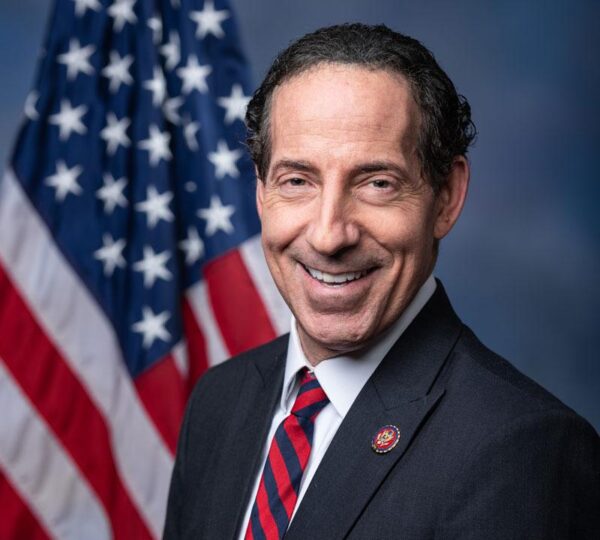
The initiative has been associated with Representative Jamie Raskin and other Democratic lawmakers who argue that clearer mechanisms are needed to evaluate presidential fitness in extreme or uncertain situations.
The bill currently includes approximately 50 Democratic co-sponsors, reflecting a level of internal party support, though it remains far from bipartisan agreement in Congress.
Under the proposed legislation, a 17-member bipartisan commission would be created to review concerns related to a president’s physical or psychological ability to serve effectively.
This commission would consist of former high-ranking officials appointed by congressional leadership from both major political parties in order to ensure balance and independence.
The structure is intended to reduce partisan influence by including experienced individuals who are no longer serving in active government roles.
The commission would be authorized to assess whether a president is “mentally or physically unable to discharge the powers and duties of the office,” based on established medical or professional evaluations.
In certain circumstances, the commission could recommend a comprehensive medical or cognitive examination if credible concerns about presidential capacity are formally presented.
Supporters of the proposal argue that such a system would provide a more organized and transparent process for addressing questions of presidential fitness under the 25th Amendment.
Representative Jamie Raskin, who introduced the bill, has stated that the intent is to protect constitutional stability and ensure accountability at the highest level of government.
He has publicly expressed concern about what he describes as declining public trust in presidential decision-making and the overall stability of executive leadership.
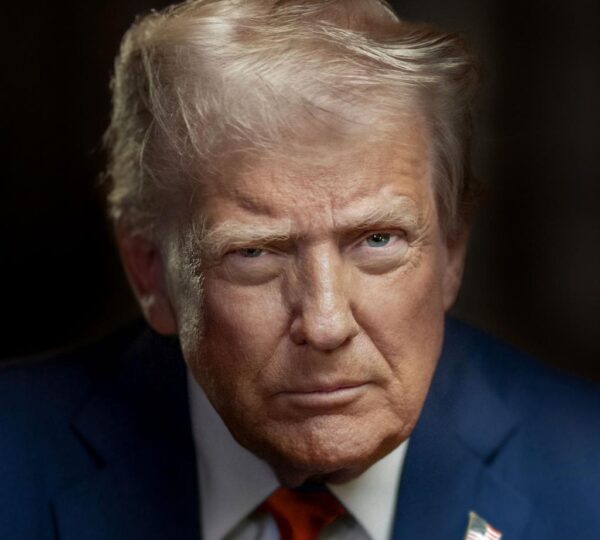
Raskin has pointed to several controversial statements and actions by President Donald Trump as contributing factors in the broader debate over presidential fitness.
Among the examples he referenced were comments related to international conflicts, including tensions involving Iran and the wider Middle East region.
He also criticized statements that he described as inflammatory or inconsistent with traditional diplomatic norms, arguing that such rhetoric could contribute to global instability.
In addition, Raskin referred to a controversial social media post that appeared to depict the president in a religious context, which sparked debate and criticism from various political observers.
The combination of these incidents has been cited by supporters of the bill as justification for creating a formal review mechanism under the 25th Amendment framework.
Raskin stated that Congress has a constitutional responsibility to ensure that mechanisms exist to respond to potential presidential incapacity in a structured and lawful manner.
He also argued that national security considerations should be part of any discussion regarding the ability of a president to perform executive duties effectively.
The proposal comes at a time of heightened political division in the United States, with strong disagreements between Democrats and Republicans over presidential conduct and authority.
Nearly 100 Democratic lawmakers have reportedly expressed support for invoking the 25th Amendment in relation to President Trump, according to public statements and media reports.
These calls have followed controversial remarks made by the president regarding international conflicts, including warnings about possible consequences if certain geopolitical conditions were not met.
Some of these statements have been interpreted differently across political lines, contributing to ongoing debate about executive communication style and foreign policy messaging.
The legislative proposal itself does not directly invoke the 25th Amendment, but instead seeks to create a process that could inform future decisions related to it.
Under the Constitution, the 25th Amendment requires the vice president and a majority of cabinet members to agree before a president can be removed due to incapacity.
This high threshold makes actual removal under the amendment extremely rare and politically complex, requiring broad executive agreement.
Even if the proposed commission were established, its recommendations would not automatically trigger removal but would instead serve as advisory findings.
Any final decision under the 25th Amendment would still depend on constitutional procedures involving the vice president and cabinet officials.
Because of these requirements, legal and political analysts widely consider the actual removal of a sitting president through this process to be highly unlikely.
Republican lawmakers are expected to strongly oppose the legislation, particularly given the current balance of power in Congress.
With Republicans controlling key legislative positions, the bill faces significant procedural and political obstacles before it could advance to a final vote.
Opponents argue that the proposal is politically motivated and could set a precedent for using medical or psychological assessments in partisan disputes.
The White House has also responded strongly to the proposal, rejecting claims about presidential incapacity and defending President Trump’s performance in office.
A spokesperson for the administration criticized Representative Raskin’s comments, describing them as politically driven and sharply disputing allegations regarding mental fitness.
The statement also referenced comparisons with previous administrations, arguing that concerns about cognitive health have been inconsistently applied in political debates.
The administration emphasized that President Trump remains active, engaged, and fully capable of fulfilling his constitutional responsibilities.
Supporters of the president have similarly rejected the proposal, characterizing it as an attempt to undermine his authority through legislative means.
They argue that political disagreement should be addressed through elections rather than through commission-based assessments of fitness for office.
At the same time, supporters of the bill maintain that the intent is not political removal but institutional preparedness in rare and serious situations.
They argue that the United States should have clearer procedures in place to address potential incapacity at the highest level of government leadership.
The discussion has contributed to broader national debate about presidential power, accountability, and the balance between political judgment and constitutional safeguards.
Legal experts note that while the 25th Amendment provides a mechanism for addressing incapacity, it was designed for extraordinary circumstances rather than routine political disagreement.
Historically, the amendment has rarely been invoked in contested political environments, and its use remains highly sensitive.
As the debate continues, the proposed legislation is expected to face lengthy discussions in congressional committees before any further progress can be made.
Given the current political composition of Congress, most analysts believe the bill has a limited chance of becoming law in its present form.
Nevertheless, the proposal has already intensified discussions about presidential health, transparency, and the mechanisms available under the U.S. Constitution.
The broader issue remains part of ongoing political tension in Washington, where debates over executive authority continue to shape legislative priorities and public discourse.
At this stage, the proposal remains in its early legislative phase, with its future dependent on further debate, committee review, and political negotiation.